When Is the Appraisal Fee Paid? (And Who Pays It)
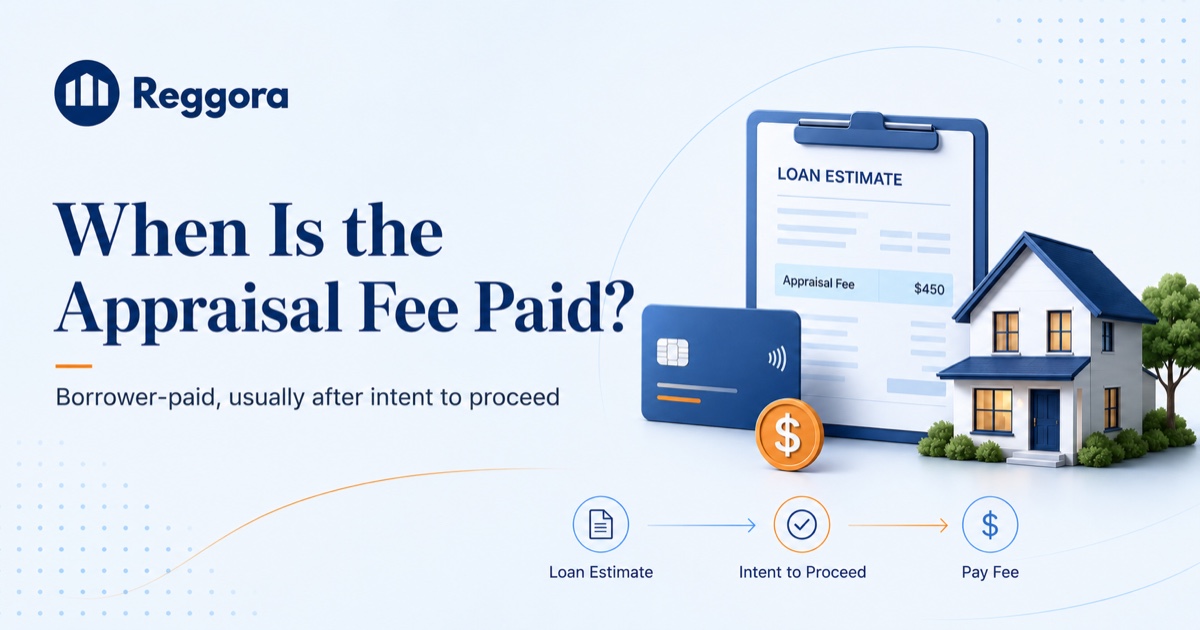
The appraisal fee is typically paid by the borrower, shortly after indicating intent to proceed with the loan; most lenders collect it at that point, before the appraisal is ordered. Federal rules set the earliest moment it can be charged: under TRID, a lender may not impose any fee other than a reasonable credit-report fee until the borrower has received the Loan Estimate and indicated intent to proceed.
The short answer: the borrower pays, usually up front by card once they've said "let's proceed", though some lenders defer collection to closing. Once the appraisal has been performed, the fee is generally non-refundable, because the appraiser must be paid whether or not the loan closes.
The timeline, step by step
- Application. No appraisal fee can be charged yet; only a reasonable credit-report fee is permitted this early.
- Loan Estimate + intent to proceed. Once the borrower receives the LE and tells the lender to move forward, the appraisal fee can be collected. Most lenders take it here, by card.
- Appraisal ordered and performed. The lender (never the borrower: appraiser-independence rules) places the order. After the inspection and report are complete, the fee is earned.
- Closing. The fee appears on the Closing Disclosure. If it was collected up front it shows as paid; if the lender deferred collection, it's paid from closing funds.
Up front vs. at closing: why lenders differ
Both approaches are legal after intent to proceed; the difference is who carries the risk. If collection waits until closing and the loan falls out after the appraisal is done, the lender pays the appraiser out of pocket. Across a full pipeline that's meaningful leakage, which is why up-front collection through a compliant payment flow has become the standard recommendation. We've written a lender-facing deep-dive on the economics: Three Reasons Lenders Should Be Collecting Appraisal Fees Up Front.
What changes the fee amount
- Assignment scope. A traditional full appraisal costs more than reduced-scope options; hybrid and desktop appraisals typically run less, and a value-acceptance (appraisal-waiver) loan has no appraisal fee at all.
- Property and market. Complex, rural, or unique properties command higher fees; busy markets with scarce appraisers do too.
- Rush requests. Compressed timelines can add rush fees, though workflow, not surcharges, is the better fix (a well-coordinated hybrid can deliver in 24 hours with no rush fee).
For lenders: making collection painless
The operational goals are simple: collect after intent to proceed, give the borrower a branded card-payment experience instead of a phone call, disburse the appraiser automatically, and keep every transaction reconciled for audit. That's the job of Reggora's appraisal payment solution: up-front borrower collection, automated vendor disbursement, and fee-escalation handling in one flow.
Frequently asked questions
When is the appraisal fee paid?
Typically shortly after the borrower receives the Loan Estimate and indicates intent to proceed; most lenders collect it at that point, before the appraisal is ordered. Federal TRID rules prohibit a lender from imposing any fee other than a reasonable credit-report fee before the borrower has received the Loan Estimate and indicated intent to proceed.
Who pays the appraisal fee?
Almost always the borrower; it appears among the loan costs on the Loan Estimate and Closing Disclosure. The lender orders the appraisal (the borrower cannot, under appraiser-independence rules), but the borrower typically funds it, either up front by card or at closing depending on the lender's policy.
Is the appraisal fee refundable?
Once the appraisal has been performed, generally no; the appraiser completed the work and must be paid regardless of whether the loan closes. If the loan falls through before the appraisal is performed, most lenders refund the collected fee. Refund policies vary, so the lender's disclosure controls.
How much is an appraisal fee?
It varies by market, property type, and assignment scope. Fees for a conventional single-family appraisal commonly run several hundred dollars, with complex or rural properties costing more. Reduced-scope options change the math: hybrid and desktop appraisals typically cost less than a traditional full appraisal, and a value-acceptance (appraisal-waiver) loan has no appraisal fee at all.
Why do lenders collect the appraisal fee up front?
Because the appraiser must be paid whether or not the loan closes. If the fee is deferred to closing and the loan falls out, the lender eats the cost; at scale, that's real revenue leakage. Up-front collection through a compliant payment flow protects the lender without changing what the borrower ultimately pays.