What Is a Desktop Appraisal? A Complete Guide for Lenders

A desktop appraisal is a full appraisal completed by a licensed appraiser without visiting the property. Instead of a personal inspection, the appraiser develops the opinion of value from existing data (MLS listings, public records, prior appraisals, and a floor plan) and delivers a complete URAR report that goes through standard underwriting.
The short answer: same appraiser, same report, same underwriting. No site visit. The appraisal is developed entirely at the appraiser's desk from records data, which is exactly where the name comes from.
Desktop appraisals are one of several valuation options the GSEs formalized as part of appraisal modernization, alongside hybrid appraisals and value acceptance (appraisal waivers). They occupy a specific niche: faster and cheaper than a traditional appraisal, but with tighter eligibility than a hybrid. This guide covers how they work, which loans qualify, the floor-plan requirement that trips up most first orders, and how the UAD 3.6 transition changes the picture after November 2, 2026.
How a desktop appraisal works
The workflow is identical to a traditional appraisal in every step except one: the inspection never happens. The appraiser is assigned the order, researches the subject property and market, selects and analyzes comparables, and completes the full appraisal report form with an opinion of market value.
What replaces the site visit is a documented reliance on secondary data sources:
- MLS records: listing photos, property descriptions, and history for the subject and comparables
- Public records: assessor data, deed history, permits, and GIS parcel information
- Prior appraisals: earlier reports on the same property, where available
- A floor plan: required, and with a catch we cover below
The appraiser remains fully responsible for the credibility of the result. USPAP doesn't require a personal inspection; it requires that the appraiser have sufficient reliable data to develop credible assignment results. If the available data isn't sufficient, the correct move is to upgrade the assignment to a traditional appraisal, and the GSE frameworks explicitly accommodate that.
From pandemic workaround to permanent option
Desktop appraisals existed for decades in non-agency contexts, but the turning point was March 2020. When in-person inspections became impossible, the GSEs issued temporary appraisal flexibilities allowing desktop and exterior-only reports on loans that would otherwise have required full appraisals. Over roughly fourteen months of pandemic lending, those flexibilities produced a large real-world dataset on how records-based valuations perform.
The results were strong enough that Fannie Mae announced at the MBA Annual Convention in October 2021 that desktop appraisals would become a permanent option, effective for DU casefiles created on or after March 19, 2022. Freddie Mac followed the same path on a similar timeline. The temporary COVID flexibilities themselves expired in May 2021; the permanent program is narrower and better defined than the emergency version was.
Which loans are eligible
The permanent desktop framework is deliberately conservative. The core eligibility profile:
- Purchase transactions, not refinances
- One-unit primary residences, including PUDs; condos, co-ops, manufactured homes, and 2–4 unit properties are excluded
- LTV of 90% or below
- An AUS desktop offer on the specific loan: DU or LPA flags eligibility in its findings, the same pattern used for hybrid and waiver offers
The AUS is the source of truth. As with hybrid appraisals, you don't decide a loan is desktop-eligible; the automated underwriting system does. Check the findings report before ordering. If the desktop message isn't there, order a different product.
Desktop vs. hybrid vs. traditional vs. waiver
The valuation spectrum runs from full traditional appraisal to no appraisal at all. Here's where the desktop sits:
| Traditional | Hybrid | Desktop | Value acceptance (waiver) | |
|---|---|---|---|---|
| Who visits the property | The appraiser | A trained property data collector | Nobody | Nobody |
| Who values the property | Licensed appraiser | Licensed appraiser | Licensed appraiser | No one: the GSE accepts the transaction without an opinion of value |
| Data source | Personal inspection | Fresh data collected on site under GSE protocols | Existing records: MLS, public records, prior reports, floor plan | GSE data models |
| Report | Full URAR | Full URAR | Full URAR | None |
| Typical turn time | Days to weeks, market-dependent | As fast as 24 hours with parallel coordination | Fast: no scheduling dependency at all | Instant |
| Best fit | Complex or unique properties | Eligible loans where fresh property data adds confidence | Data-rich properties with a usable floor plan | Loans the GSE models can price without an appraisal |
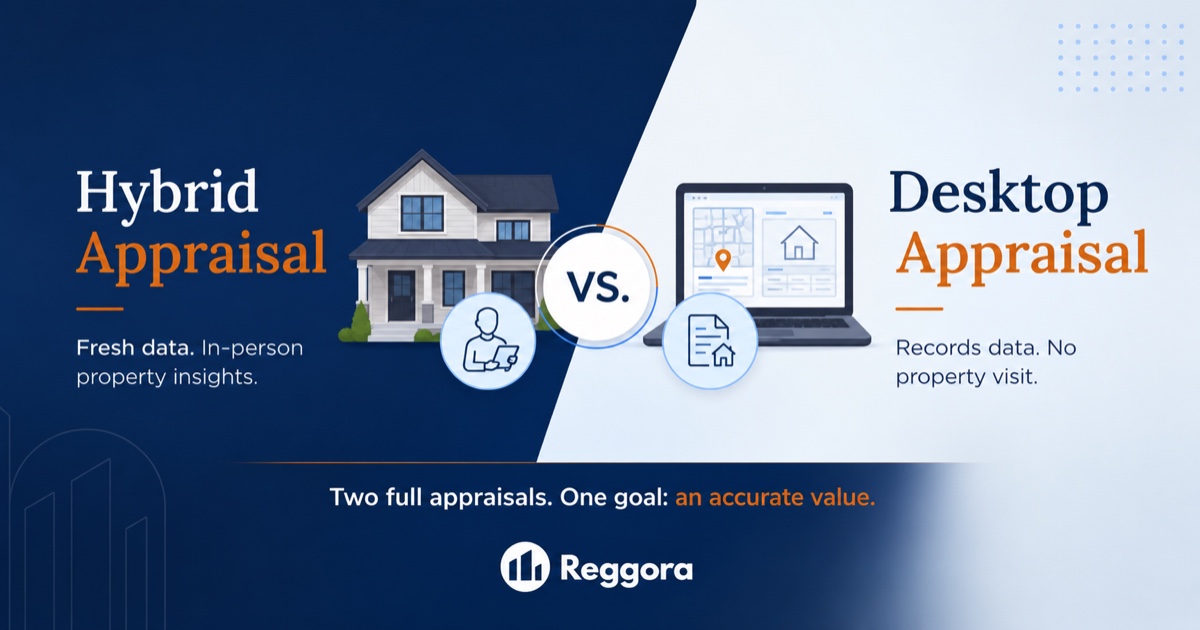
The practical takeaway: hybrids and desktops are both full appraisals with reduced-scope inspections, but they solve different problems. A hybrid generates new property data; a desktop reuses existing data. That's why hybrid eligibility is broader: fresh data de-risks more scenarios.
The floor-plan requirement: the gotcha that decides most orders
A desktop appraisal requires a floor plan showing interior walls. That's a meaningfully higher bar than the exterior-perimeter sketch a traditional report carries, and it's the single most common reason a desktop order stalls or gets upgraded to a full appraisal.
Acceptable sources include a prior appraisal of the property, builder or architectural plans, and floor plans generated by smartphone scanning apps, provided the source is credible and disinterested. In practice:
- New construction and recent resales are the easiest candidates: plans and prior reports usually exist
- Older housing stock with no digital footprint is the hardest: if no floor plan exists and nobody can produce one, the desktop isn't viable
- Agent and borrower cooperation matters: scanning apps have made on-demand floor plans realistic, but someone still has to walk the house with a phone
What UAD 3.6 changes for desktop appraisals
Everything above describes the world of numbered forms: 1004 for a traditional appraisal, 1004 Desktop for a desktop, 1004 Hybrid for a hybrid. That world ends on November 2, 2026, when the UAD 3.6 mandate takes effect and the GSEs retire the legacy forms entirely.
Under UAD 3.6 there is one dynamic URAR, and what used to be a form choice becomes a scope-of-work characteristic inside the report: the data standard captures how the property was inspected (personally, by a data collector, or not at all) as structured fields rather than as separate form numbers. The desktop appraisal doesn't go away; it becomes one inspection-scope configuration of the single report.
For lenders, the operational implication is that product selection moves from "which form number do I order" to "which property, borrower, and data characteristics does this loan have." Systems, LOS mappings, and ordering workflows built around form numbers need to be updated, which is the core of what we cover in our UAD 3.6 webinar with Fannie Mae and on our UAD 3.6 readiness page.
When lenders should use desktop appraisals, and when not to
Reach for a desktop when:
- The AUS flags the loan as desktop-eligible and the property has a rich data trail: recent MLS activity, a prior appraisal, or available plans
- Appraiser capacity in the market is tight and scheduling a site visit would add days of turn time
- The transaction is straightforward: conforming property, active market, no unusual features that demand firsthand observation
Skip the desktop when:
- No credible floor plan exists and nobody can produce one
- The property is unusual enough that records data can't capture its condition or characteristics; the appraiser will end up upgrading the assignment anyway
- A hybrid offer is also on the table and fresh property data would materially improve confidence; a hybrid through a coordinated workflow like Streamlined Appraisal can be just as fast and carries broader eligibility
A note on quality: a desktop appraisal is only as good as the data behind it. The lenders getting consistent results treat desktops as a data-availability decision, not a cost decision: they order desktops where the records support them and route everything else to hybrid or traditional products.
Hybrid or desktop? Weighing the two products against each other? See the side-by-side: Hybrid vs. Desktop Appraisal: What's the Difference?
Frequently asked questions
Is a desktop appraisal a full appraisal?
Yes. A desktop appraisal is a complete appraisal performed by a licensed or certified appraiser, delivered on a full URAR report, submitted through UCDP, and scored by the GSEs' collateral tools the same way a traditional appraisal is. Only the scope of inspection changes: the appraiser develops the opinion of value from records data rather than a personal site visit.
How is a desktop appraisal different from a hybrid appraisal?
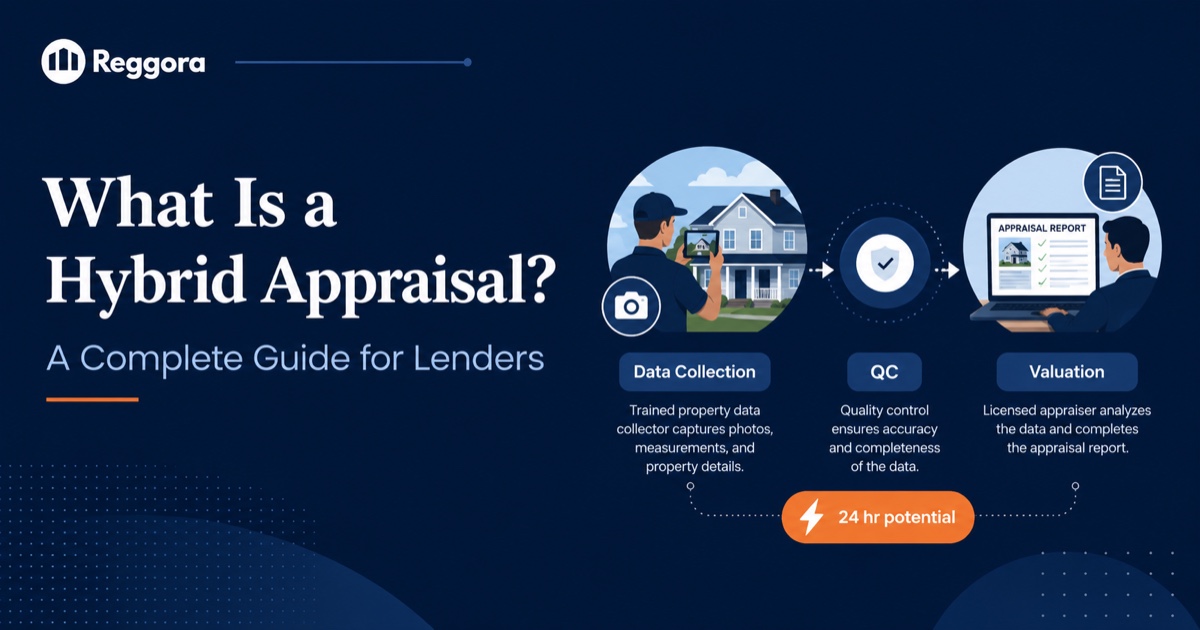
In a hybrid appraisal, a trained property data collector physically visits the home and captures fresh photos, measurements, and condition data, which the appraiser then uses to complete the valuation. In a desktop appraisal, nobody visits the property at all; the appraiser relies on existing data sources such as MLS records, public records, and a floor plan. Hybrids produce new first-hand property data; desktops do not.
When did desktop appraisals become permanent?
Fannie Mae made desktop appraisals a permanent option for eligible purchase loans with DU casefiles created on or after March 19, 2022, after piloting remote flexibilities during the pandemic. Freddie Mac introduced its equivalent desktop offering on a similar timeline in early 2022.
What loans are eligible for a desktop appraisal?
Under the GSEs' permanent frameworks, eligibility centers on purchase transactions secured by one-unit primary residences with loan-to-value ratios of 90% or below, where the automated underwriting system (DU or LPA) returns a desktop appraisal offer on the specific loan. Condos, co-ops, manufactured homes, multi-unit properties, and most refinances are outside the permanent desktop framework.
Does a desktop appraisal require a floor plan?
Yes, and this is the requirement that most often decides whether a desktop is practical. The GSEs require a floor plan that shows interior walls, a step beyond the exterior-perimeter sketch on a traditional report. It can come from a prior appraisal, builder plans, or a smartphone scanning app, but it must come from a credible, disinterested source.
Is a desktop appraisal the same as an appraisal waiver?
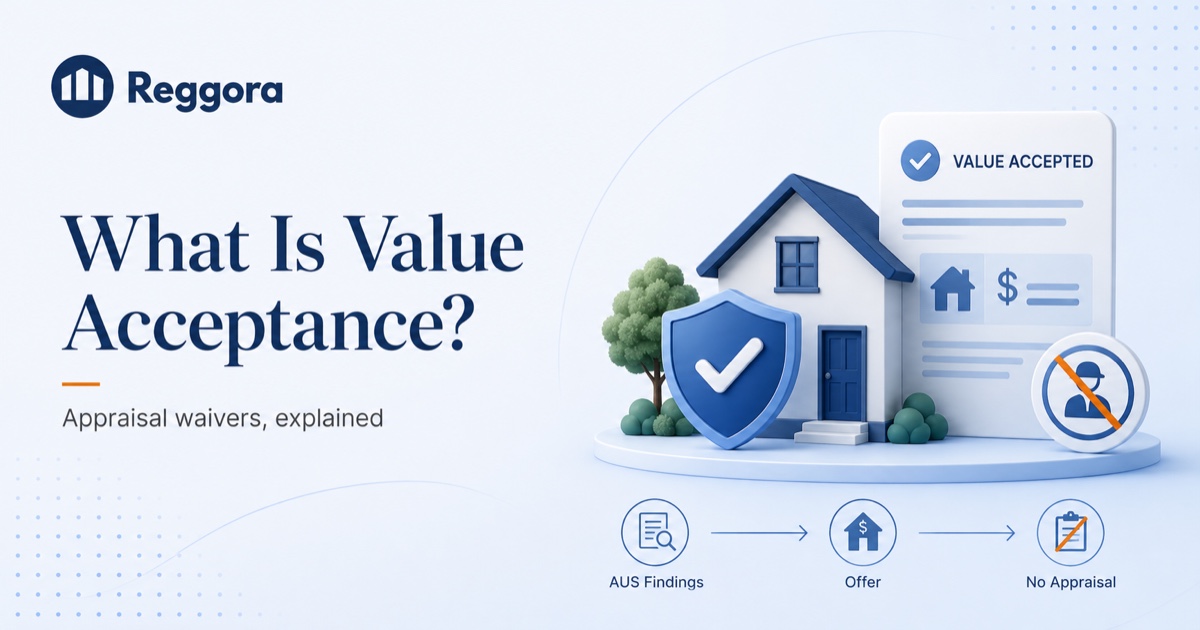
No. An appraisal waiver (value acceptance) means no appraisal is performed at all; the GSE accepts the transaction without an appraiser's opinion of value. A desktop appraisal is a real appraisal with a real appraiser and a full URAR report; only the inspection method differs.
Where Reggora fits
Reggora's appraisal management platform handles the full valuation spectrum (traditional, hybrid, and desktop) with AUS-driven product selection, automated vendor allocation, and a QC layer that validates data packages before they reach the appraiser. If you're building a modern valuation strategy ahead of the UAD 3.6 mandate, talk to our team or explore how our 24-hour hybrid workflow works.