What Is a Hybrid Appraisal? A Complete Guide for Lenders
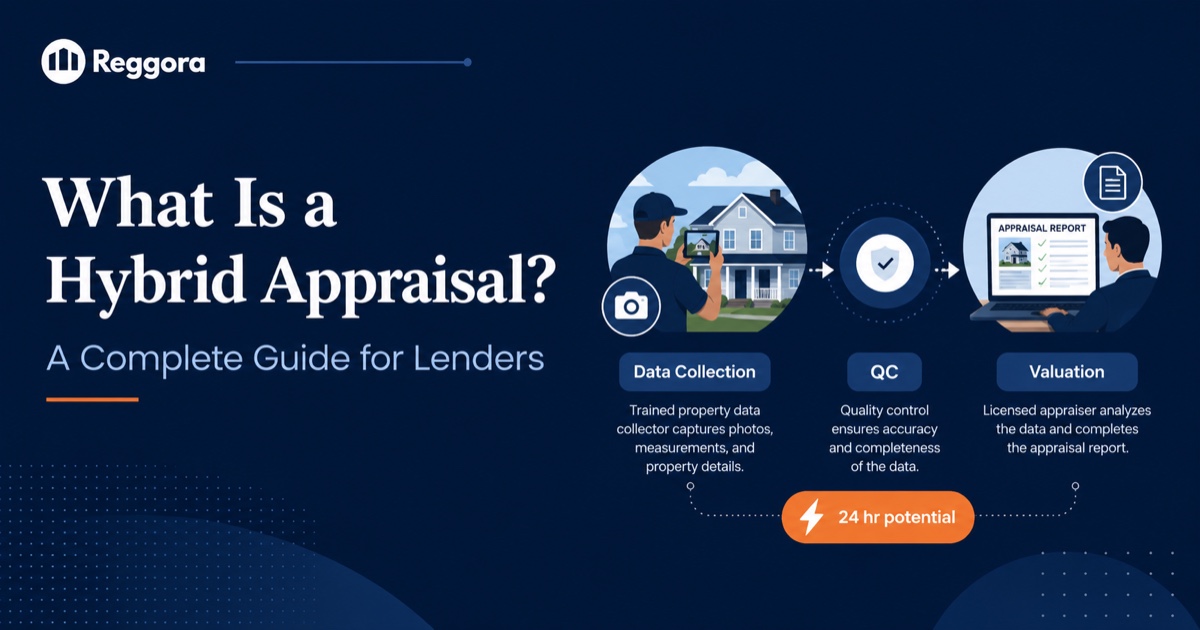
A hybrid appraisal is a full appraisal in which the fieldwork and the valuation are performed by different people: a trained property data collector inspects the home and captures photos, measurements, and condition data, and a licensed appraiser uses that data to complete the valuation and sign a full URAR report.
The short answer: same licensed appraiser, same complete report, same underwriting; the on-site inspection is just handled by a trained data collector instead of the appraiser. The appraiser's professional judgment is unchanged; only the fieldwork is separated.
Hybrids are the centerpiece of the GSEs' appraisal-modernization push, and since early 2025 they've been formal selling-guide products at both Fannie Mae and Freddie Mac. This guide covers how the workflow actually runs, which loans qualify and how the AUS tells you, how hybrids compare to desktop appraisals and appraisal waivers, the risk and repurchase picture, and what the UAD 3.6 mandate changes after November 2, 2026.
How a hybrid appraisal works
The workflow has four steps, and understanding who does what is the whole story:
- Order placed. The loan is confirmed hybrid-eligible in the AUS and the order goes out as a hybrid product type.
- Property data collection. A trained, GSE-approved data collector visits the property and captures photos, a floor plan with measurements, and room-level condition data under a standardized GSE protocol.
- Quality control. The data package is validated for completeness, consistency, and GSE compliance before it ever reaches the appraiser. Anything missing goes back to the collector first.
- Valuation. The appraiser receives the validated package, analyzes the market, selects and adjusts comparables, and completes the full URAR report, exactly the professional work they'd do on a traditional assignment, minus the drive.
The report is submitted through UCDP and scored by Collateral Underwriter like any other appraisal. The appraiser retains full authority throughout: they can flag insufficient data, request more information, or reject the assignment. Their signature means they've accepted professional responsibility for the valuation.
Who is the property data collector?
The person at the door is a trained, background-checked professional operating under the GSEs' Property Data Collector Independence Requirements (PDCIR), the direct analog of the Appraiser Independence Requirements that govern appraisers. The collector must be unaffiliated with the transaction, follows a standardized GSE data protocol, and produces a package the appraiser can rely on. This is the piece borrowers and agents most often misunderstand, and the framing that works is simple: a trained inspector gathers the data; a licensed appraiser writes the full official report.
From pilot programs to selling-guide products
Hybrid-style valuations spent years in GSE pilot programs and pandemic-era flexibilities. The turning point came in early 2025, when both GSEs wrote hybrids into their selling guides as standard products:
| Fannie Mae | Freddie Mac | |
|---|---|---|
| Single-family form | Form 1004 Hybrid | Form 70H |
| Condo form | Form 1073 Hybrid | Form 465H |
| Where the offer appears | DU Underwriting Findings Report: a message referencing the hybrid form | LPA Feedback Certificate: code FPA0114 (70H) or FPA0159 (465H); ACE+ PDR loans (FPA0100) can also be ordered as a 70H hybrid |
| Effective | March 22, 2025 | April 7, 2025 |
| Announced in | SEL-2025-01 | Guide Bulletin 2025-1 |
Eligible transaction types include purchases, limited cash-out refinances, and cash-out refinances on 1-unit properties including condos and PUDs, meaningfully broader than the permanent desktop-appraisal framework, which is purchase-only. In practice, over 90% of conventional loans come back flagged as hybrid-eligible.
The AUS is the source of truth. You don't decide a loan is hybrid-eligible; DU or LPA does, loan by loan. Check the findings before ordering, confirm your investor has no overlay excluding hybrids, and place the order as a hybrid product type. If your lender has questions, SEL-2025-01 and Guide Bulletin 2025-1 are the documents to point at.
Hybrid vs. traditional vs. desktop vs. waiver
| Traditional | Hybrid | Desktop | Value acceptance (waiver) | |
|---|---|---|---|---|
| Who visits the property | The appraiser | A trained property data collector | Nobody | Nobody |
| Property data | Appraiser's personal inspection | Fresh, collected on site under GSE protocols | Existing records: MLS, public records, prior reports | GSE data models |
| Who values the property | Licensed appraiser | Licensed appraiser | Licensed appraiser | No one |
| Report | Full URAR | Full URAR | Full URAR | None |
| Eligibility breadth | Any loan | Purchases + refis, 1-unit incl. condos/PUDs, per AUS offer | Purchases only, LTV ≤ 90%, per AUS offer | Narrowest: model-priced loans only |
| Speed | Days to weeks, market-dependent | As fast as 24 hours with parallel coordination | Fast: no scheduling dependency | Instant |
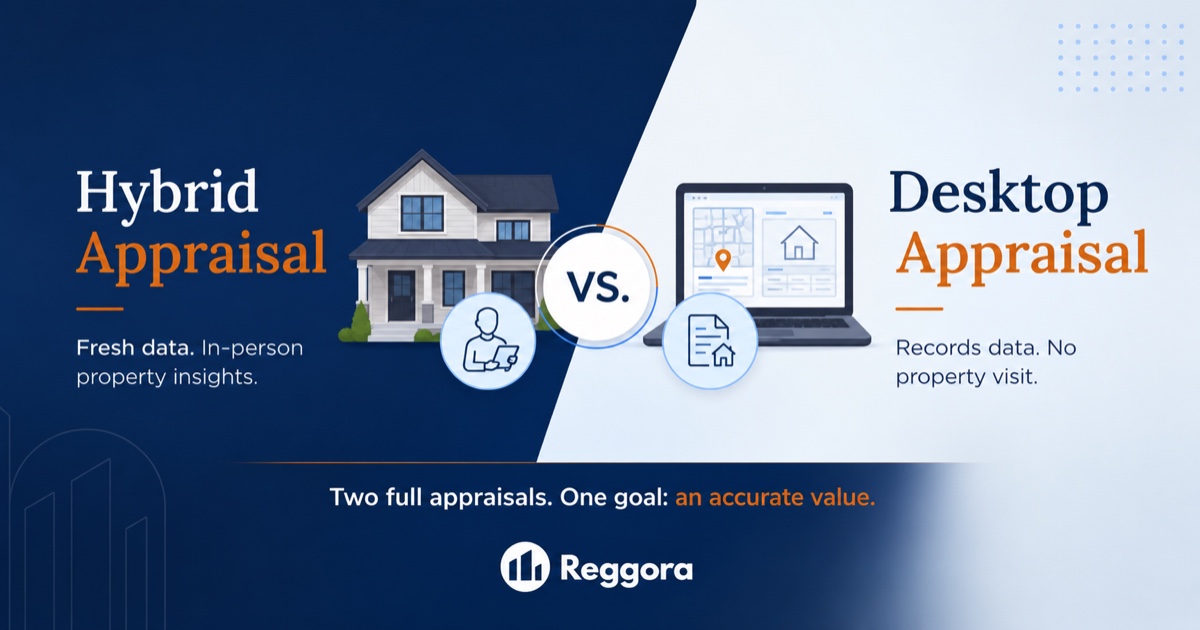
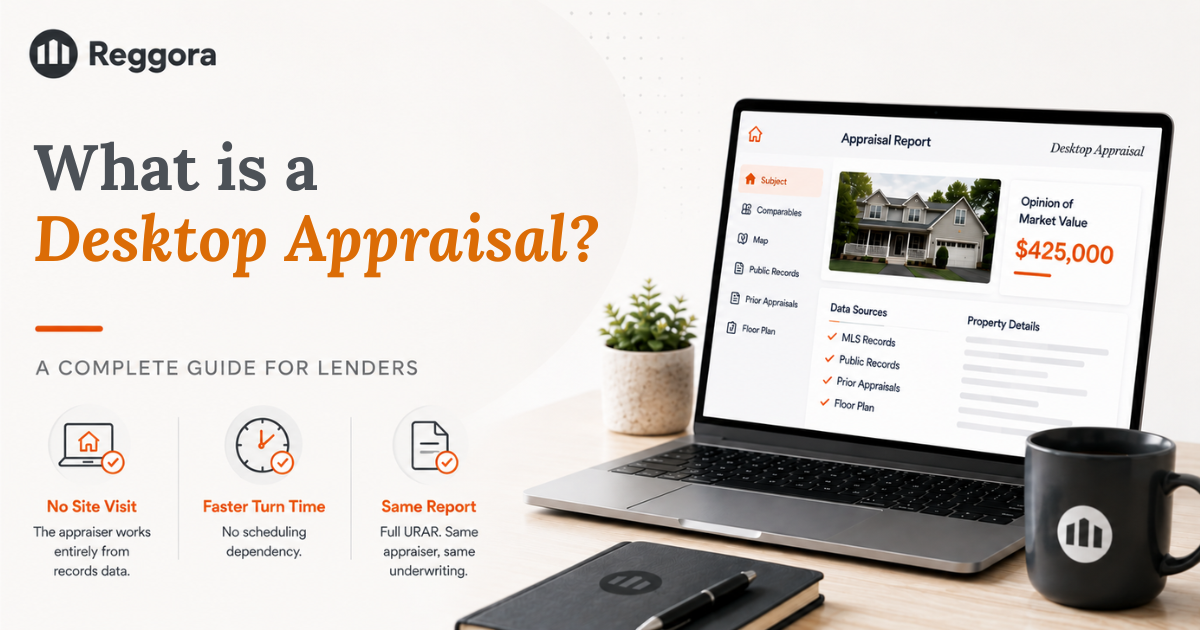
The one-line distinction that matters: a hybrid generates new first-hand property data; a desktop reuses existing data. Fresh data de-risks more scenarios, which is why the hybrid framework covers more transaction types. For the full desktop story, see What Is a Desktop Appraisal?
Quality, compliance, and repurchase risk
Hybrid appraisals flagged eligible by DU or LPA carry the same representation-and-warranty protections as traditional appraisals when delivered per GSE guidelines. Reports are scored by Collateral Underwriter, and loans with a CU risk score of 2.5 or below qualify for enforcement relief on the appraisal value representation, identical to the relief available on traditional appraisals.
Where hybrids have earned a bad reputation historically, the trail leads to vendor process failures: poor data collection, no QC layer between collector and appraiser, or non-compliant workflows. Those are vendor quality problems, not product-category problems, and the practical control is choosing a partner with a documented QC process that validates every data package before the appraiser sees it.
Why some hybrids close in 24 hours, and most don't
The hybrid structure creates a speed opportunity that most platforms leave on the table. If the data collector and the appraiser are scheduled sequentially (collect first, then find an appraiser), the hybrid is only marginally faster than a traditional appraisal. Coordinating them simultaneously changes the math: the order is assigned to a nearby collector immediately, the QC'd data package is released to an appraiser the same day (often while collection is still in progress), and the completed URAR can be delivered within 24 hours.
That parallel workflow is exactly what Reggora's Streamlined Appraisal product does, backed by a 50-state data-collector network; it's an operational SLA, not a marketing claim.
What UAD 3.6 changes for hybrid appraisals
The form names above (1004 Hybrid, 70H) retire on November 2, 2026, when the UAD 3.6 mandate takes effect and the GSEs move to a single dynamic URAR. Hybrids don't go away; the hybrid inspection becomes a scope-of-work characteristic captured as structured data inside the one report, rather than a separate form number.
For lenders, product selection shifts from "which form do I order" to "which property, borrower, and data characteristics does this loan have", and ordering systems built around form numbers need updating. That transition is the subject of our UAD 3.6 webinar with Fannie Mae and the UAD 3.6 readiness hub.
When to use a hybrid, and when not to
Reach for a hybrid when:
- The AUS flags the loan as eligible and turn time matters: purchase timelines, rate locks, appraiser-scarce markets
- The transaction is conventional and conforming: 1-unit, condo, or PUD, purchase or refi
- You want fresh, protocol-collected property data rather than relying on records: new construction, recent renovations, or thin public-record coverage
Stick with a traditional appraisal when:
- The AUS doesn't offer the hybrid: no offer, no hybrid, full stop
- The property is complex or unique enough that the appraiser's own inspection judgment adds real value
- Your investor carries an overlay excluding hybrids (worth confirming: many overlays predate the 2025 selling-guide changes)
Hybrid or desktop? Weighing the two products against each other? See the side-by-side: Hybrid vs. Desktop Appraisal: What's the Difference?
Frequently asked questions
Is a hybrid appraisal a full appraisal?
Yes. A hybrid appraisal is a complete appraisal: a licensed or certified appraiser develops the opinion of value and signs a full URAR report, which is submitted through UCDP and scored by Collateral Underwriter the same way a traditional appraisal is. What changes is the fieldwork: a trained property data collector performs the on-site inspection instead of the appraiser.
Who inspects the property in a hybrid appraisal?
A trained, GSE-approved property data collector (PDC) visits the property and captures photos, floor plan measurements, and condition data under a standardized GSE protocol. The collector must be unaffiliated with the transaction and pass a background check, operating under the GSEs' Property Data Collector Independence Requirements (PDCIR), the analog of the Appraiser Independence Requirements that govern appraisers.
How do I know if a loan qualifies for a hybrid appraisal?
The automated underwriting system tells you directly. In Fannie Mae's DU Underwriting Findings Report, look for a message referencing Form 1004 Hybrid (single-family) or Form 1073 Hybrid (condo). On Freddie Mac's LPA Feedback Certificate, look for feedback code FPA0114 (Form 70H) or FPA0159 (Form 465H); loans flagged for ACE+ PDR (FPA0100) can also be ordered as a Form 70H hybrid. Over 90% of conventional loans are flagged eligible when submitted.
How is a hybrid appraisal different from a desktop appraisal?
Both are full appraisals with reduced-scope inspections, but a hybrid generates fresh property data (a data collector physically visits the home) while a desktop reuses existing records data with no new site visit at all. Because fresh data de-risks more scenarios, hybrid eligibility is broader: it covers purchases and refinances on 1-unit properties including condos and PUDs, where the permanent desktop framework is purchase-only.
Is a hybrid appraisal the same as an appraisal waiver?
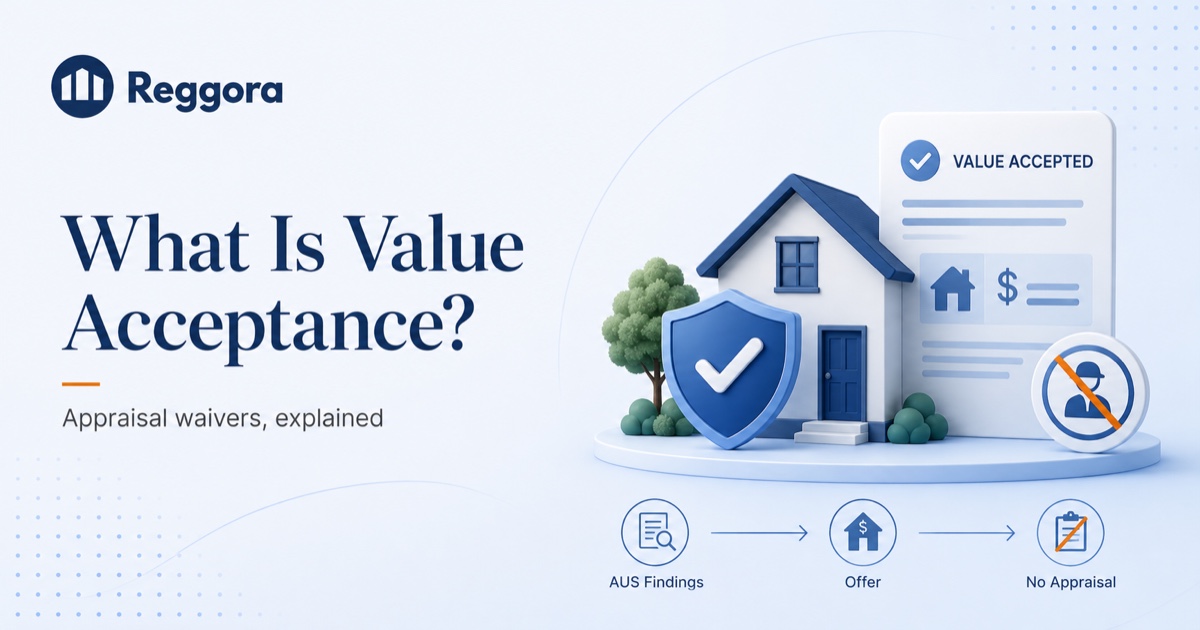
No. An appraisal waiver (value acceptance) means no appraisal is performed and no appraiser is involved; the GSE accepts the transaction based on its data models. A hybrid appraisal is a real appraisal with a physical inspection, a licensed appraiser's professional valuation, and a full URAR report.
Do hybrid appraisals increase repurchase risk?
Not when executed correctly on a GSE-eligible loan. Hybrids flagged eligible by DU or LPA carry the same representation-and-warranty protections as traditional appraisals, and loans with a Collateral Underwriter risk score of 2.5 or below qualify for enforcement relief on the appraisal value representation. Historical repurchase issues with hybrids have traced to vendor process failures (poor data collection or missing QC), not to the product category.
How fast is a hybrid appraisal?
It depends entirely on how the workflow is coordinated. Most platforms schedule the data collector and appraiser sequentially, which makes hybrids only marginally faster than traditional appraisals. Workflows that coordinate both in parallel, assigning the appraiser while data collection is still in progress, can deliver the completed report in as little as 24 hours.
Where Reggora fits
Reggora runs the full hybrid workflow: AUS-driven eligibility, immediate data-collector allocation, a QC layer on every data package, and parallel appraiser coordination that delivers most hybrid reports in 24 hours. If you're a loan officer, start with our hybrid appraisal resource hub for LOs: eligibility codes, borrower scripts, and the ten most common questions. If you're evaluating hybrids for your appraisal operation, talk to our team or see how Streamlined Appraisal works.