Appraisal Management Software: The Lender's Buyer's Guide
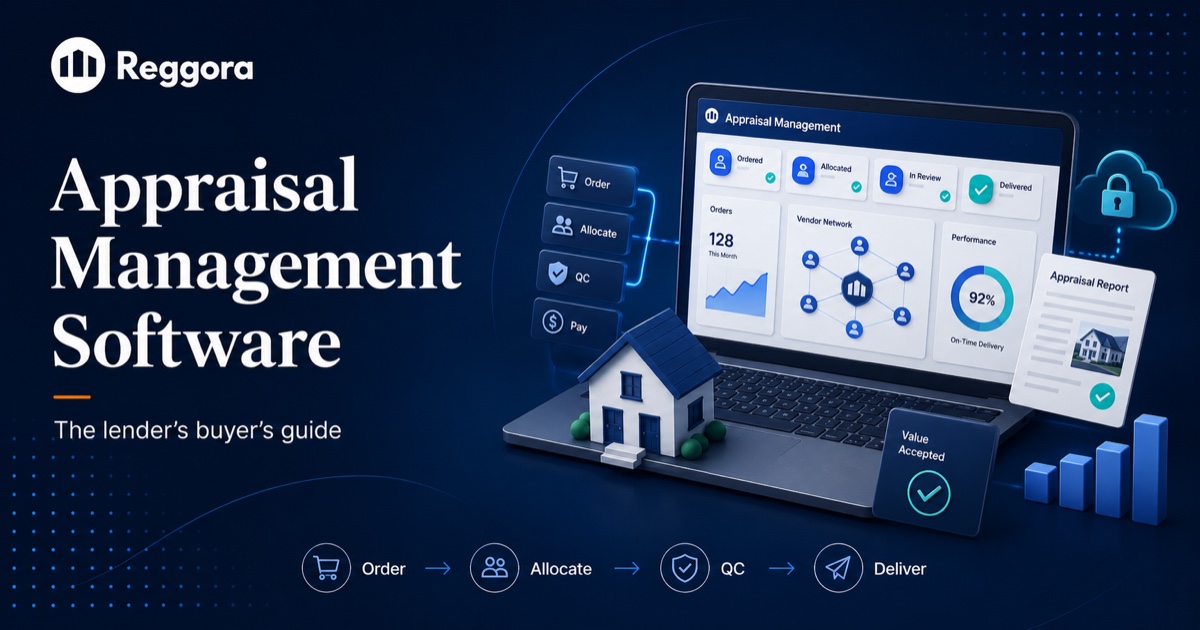
Appraisal management software is the platform layer a mortgage lender uses to run appraisals in-house: ordering and automated vendor allocation, appraiser panel management, status tracking, quality-control review, borrower payment collection, and LOS-integrated delivery to underwriting. It's the third option between two familiar defaults: managing appraisals manually, or outsourcing the whole function to an AMC.
Who this guide is for: lenders evaluating appraisal technology, whether you're replacing spreadsheets and shared inboxes, reconsidering an all-AMC model, or comparing platforms. It covers what the software actually does, the capability checklist that separates platforms, and the questions that expose weak vendors, including the one most evaluations still miss: UAD 3.6 readiness.
The three ways lenders run appraisals
| Manual (email + spreadsheets) | AMC outsourcing | Appraisal management software | |
|---|---|---|---|
| Who controls the panel | You, informally | The AMC | You, with automation |
| Vendor selection | Whoever answers the phone | AMC's network and rules | Your allocation rules: proximity, performance, capacity |
| Cost structure | Staff time, hidden | AMC margin on every order | Platform pricing; panel fees stay with appraisers |
| Visibility | Inbox archaeology | Portal, AMC-controlled | Real-time status, your data |
| Scales with volume | Poorly: headcount-bound | Yes, at per-order cost | Yes: automation absorbs volume |
These aren't mutually exclusive: a common pattern is software-managed panels in core markets with AMC fulfillment where coverage is thin, run through one platform so the workflow, status visibility, and data stay unified.
The capability checklist
Eight capabilities separate real platforms from order-tracking tools:
- Automated vendor allocation: orders assigned by rules (proximity, turn-time performance, quality scores, capacity), not by a coordinator working a call list.
- Panel management: onboarding, licensing and E&O tracking, scorecards, and compliance with appraiser-independence requirements built into the workflow.
- Full product coverage: traditional, hybrid, and desktop appraisals plus property-data collection, selected per loan from the AUS findings rather than one-size-fits-all.
- Quality control: automated review rules on every report before underwriting sees it, with revision requests tracked in the same thread.
- Payments: up-front borrower collection, automated appraiser disbursement, and reconciliation (see when the appraisal fee is paid for why collection timing matters).
- LOS integration: bidirectional, order-from-the-LOS depth (Encompass and the rest), not a nightly export.
- Reporting: turn times, fee variance, vendor performance, and pipeline status your capital-markets and ops teams can actually use.
- UAD 3.6 readiness: see below; this is the 2026 filter.
The 2026 question: UAD 3.6 readiness
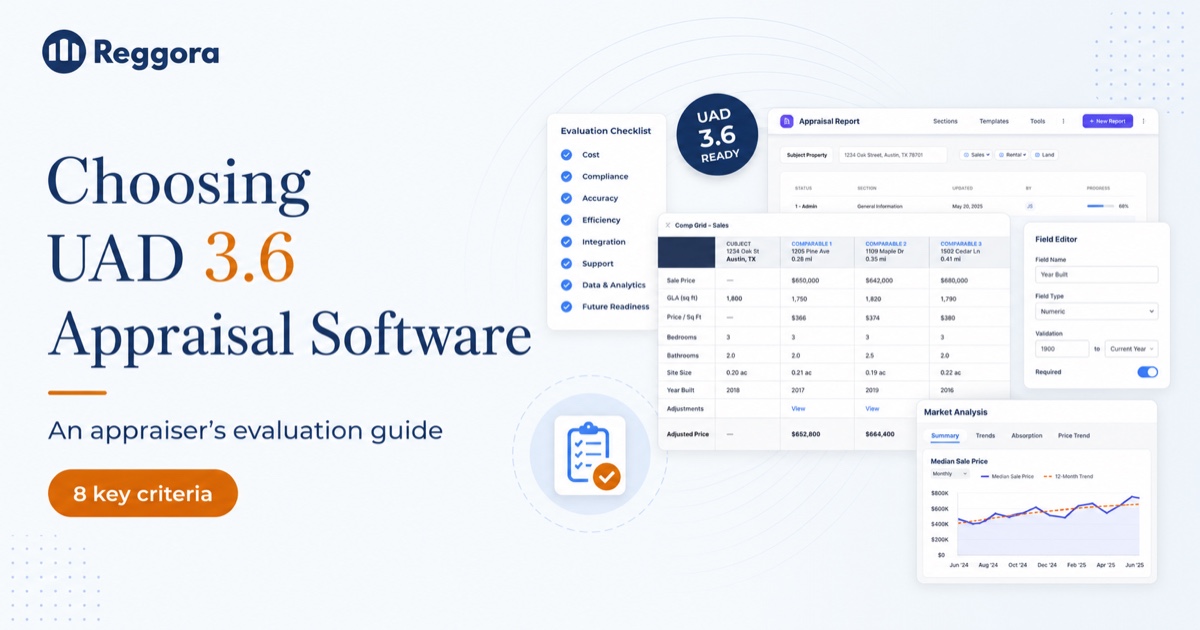
On November 2, 2026, the GSEs retire the legacy form numbers in favor of a single dynamic URAR built on structured data. That changes what "supports appraisal ordering" means: platforms built around form-number pick lists need rework, ordering flows move to property-and-assignment characteristics, and delivery pipelines must handle the new report format. Ask every vendor to demonstrate, not promise, their UAD 3.6 flow, and ask whether their appraiser-facing tooling is GSE-verified. Reggora's forms software completed Fannie Mae and Freddie Mac UAD 3.6 verification in 2026, and our readiness hub tracks the full timeline.
Questions that expose weak vendors
- Show me an order flowing from LOS submission to underwriting delivery. How many human touches did that take?
- What are your measured turn times by product and market, not your SLA, your actuals?
- How does allocation decide which appraiser gets the order, and can I change the rules myself?
- Walk me through a hybrid order: who coordinates the data collector and the appraiser, and are they sequential or parallel?
- What happens when a borrower's card payment fails, or a fee needs to escalate mid-order?
- Demonstrate your UAD 3.6 ordering and delivery flow today.
- What's your implementation timeline, and what does my team have to build versus configure?
What results look like
The measurable outcomes lenders see on Reggora: appraisal turn times cut by 35%, an average of $250 saved per loan, and go-live in under 45 days, across 300+ lenders. The mechanics behind those numbers are the capabilities above: allocation automation removes coordination lag, up-front payment collection stops fee leakage, and parallel hybrid coordination delivers 24-hour appraisals on eligible loans.
Frequently asked questions
What is appraisal management software?
Appraisal management software is a platform lenders use to run the appraisal process in-house: ordering and vendor allocation, appraiser panel management, status tracking and communication, quality-control review, borrower payment collection, and delivery to underwriting, with integrations into the loan origination system. It replaces both spreadsheet-and-email workflows and full outsourcing to an AMC.
What's the difference between appraisal management software and an AMC?
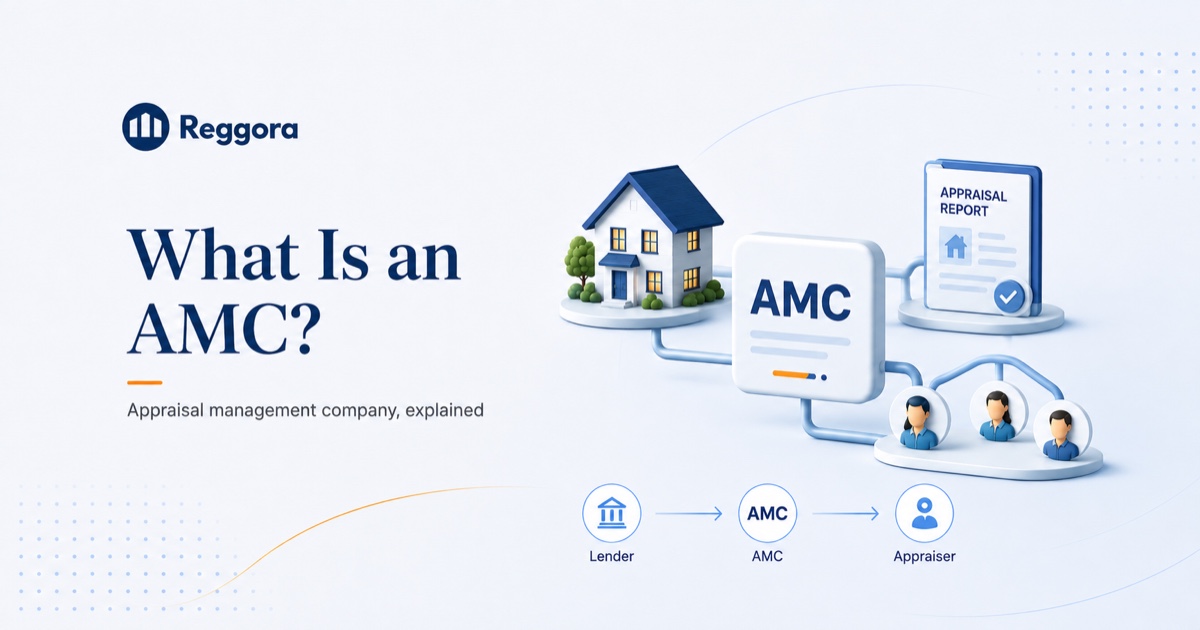
An AMC (appraisal management company) is a service: you send it orders and it manages appraisers on your behalf, for a fee built into each appraisal. Software is a capability: your team keeps control of the panel, allocation rules, and quality standards, with automation doing the coordination work. Many lenders run both: software for managed panels in core markets, AMC fulfillment where panel coverage is thin.
How long does appraisal management software take to implement?
Weeks, not quarters, when the vendor has prebuilt LOS integrations. Reggora lenders typically go live in under 45 days, including LOS integration, panel onboarding, and workflow configuration.
What should lenders ask vendors about UAD 3.6?
Three things: whether the platform supports ordering by property and assignment characteristics rather than legacy form numbers (forms retire November 2, 2026), whether it handles the new URAR delivery format end to end, and whether the vendor's appraiser-facing tooling is GSE-verified for UAD 3.6; Reggora's forms software completed Fannie Mae and Freddie Mac verification in 2026.
How is appraisal management software priced?
Models vary: per-order fees, monthly platform fees, or a blend. The sharper question is net cost per loan after savings: automation reduces manual coordination touches, up-front fee collection stops revenue leakage, and faster turn times cut rate-lock extensions. Reggora lenders save an average of $250 per loan.
See it running
The fastest way to evaluate appraisal management software is to watch your own workflow run on it. Book a demo and bring the seven questions above, or start with the platform overview for lenders.