Improving Your ROV Process to Address the Issue of Appraisal Bias

The Growing Focus on Appraisal Bias
The Consumer Financial Protection Bureau (CFPB), along with other federal agencies, has increased scrutiny on potential bias in the appraisal process. For lenders, having a robust and well-documented Reconsideration of Value (ROV) process is more important than ever.
What Is Appraisal Bias?
Appraisal bias occurs when a property's value is influenced by factors unrelated to the property's actual worth, such as the race, ethnicity, or neighborhood demographics of the homeowner. Research has shown that properties in predominantly minority neighborhoods are more likely to be undervalued.
Building an Effective ROV Process
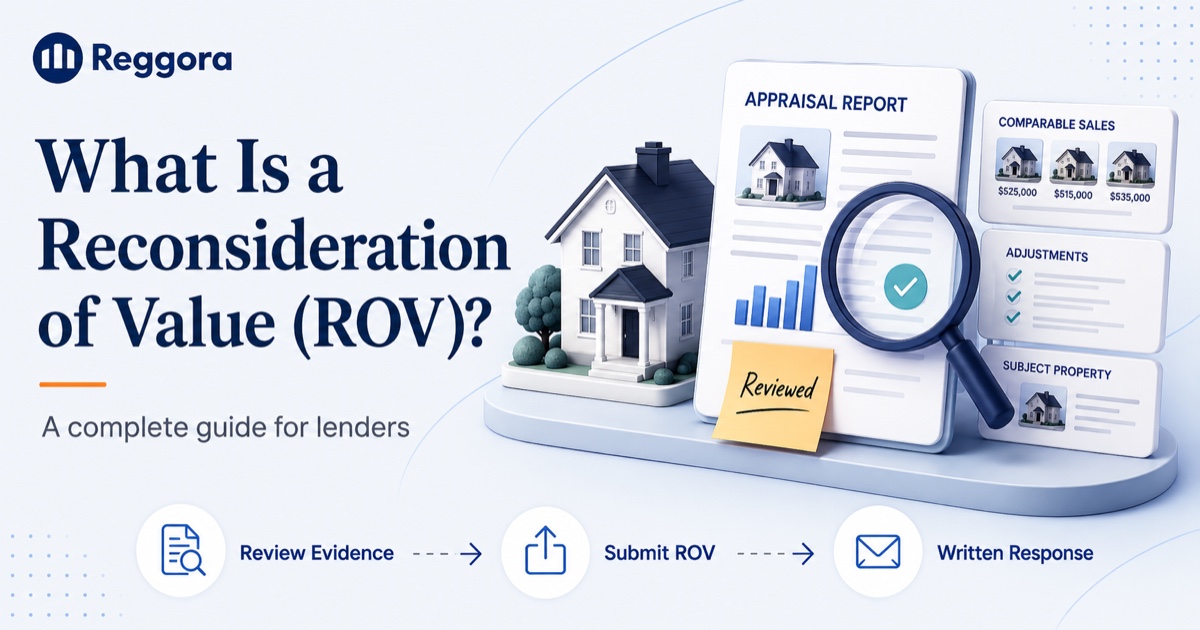
Step 1: Accept ROV Requests Proactively
Make it easy for borrowers to submit ROV requests. Provide clear instructions and a simple submission process. Don't create barriers that discourage legitimate concerns.
Step 2: Review for Potential Bias Indicators
When a ROV request is received, review the appraisal for potential bias indicators:
- Were comparable sales from outside the subject's neighborhood used without justification?
- Were relevant sales in the subject's neighborhood excluded?
- Do the condition or quality ratings seem inconsistent with the photos?
- Are there unexplained adjustments that disproportionately affect value?
Step 3: Forward to the Appraiser with Documentation
Send the ROV request to the appraiser along with any supporting documentation the borrower has provided, such as alternative comparable sales or evidence of recent improvements.
Step 4: Require a Written Response
The appraiser must provide a written response addressing each point raised in the ROV request. If they maintain their original value, they must explain why the borrower's concerns don't warrant a change.
Step 5: Document Everything
Maintain a complete audit trail of the entire ROV process, including:
- The original ROV request and supporting documentation
- Communications with the appraiser
- The appraiser's written response
- Any value changes made
- Final resolution and borrower notification
How Reggora Streamlines the ROV Process
Reggora's platform automates many aspects of the ROV workflow:
- Digital ROV submission: borrowers and LOs can submit requests through the platform
- Automated routing: requests are forwarded to the appraiser with all supporting documentation
- Timeline tracking: automated reminders ensure timely responses
- Complete audit trail: every step is documented for compliance
Want to improve your ROV process? Request a demo to see how Reggora can help you handle value disputes efficiently and compliantly.